

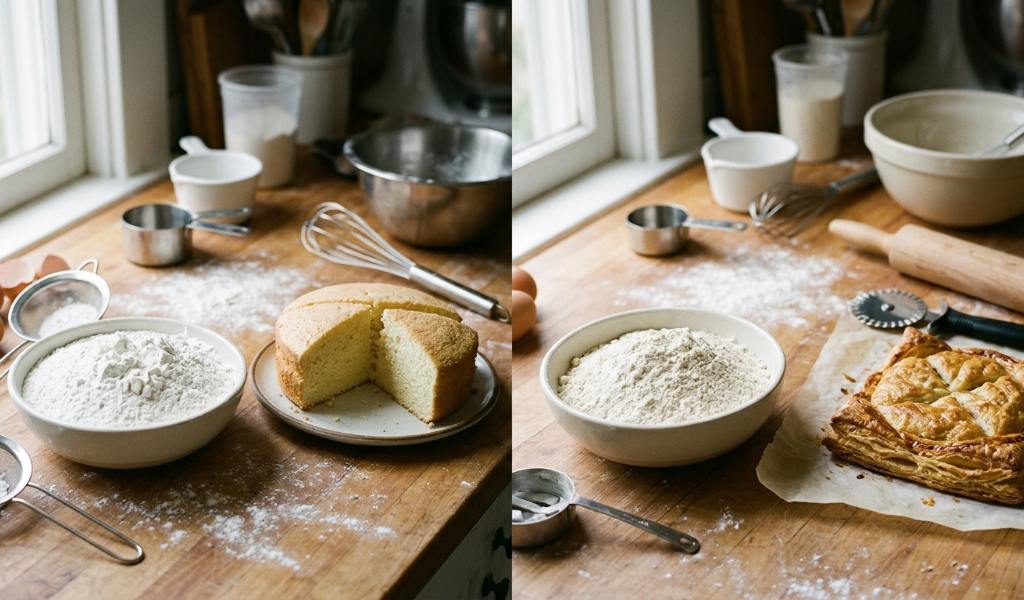
No, pastry flour and cake flour are not the same. Both come from soft wheat and carry low protein levels, but cake flour sits lower still, around 6 to 8 percent protein, while pastry flour runs closer to 8 to 9 percent. That small gap changes texture, structure, and how each flour performs once it hits the oven.
Bakers often grab whichever bag sits closest on the shelf. However, each flour earns its place for a reason. Understanding the difference helps you pick the right one and avoid a cake that turns tough or a pie crust that falls apart.
What Makes Pastry Flour Different
Pastry flour comes from soft wheat, milled finely but not as fine as cake flour. Its protein content lands around 8 percent, which keeps gluten formation low without eliminating it completely. As a result, dough made with pastry flour holds together just enough to shape, yet stays tender once baked.
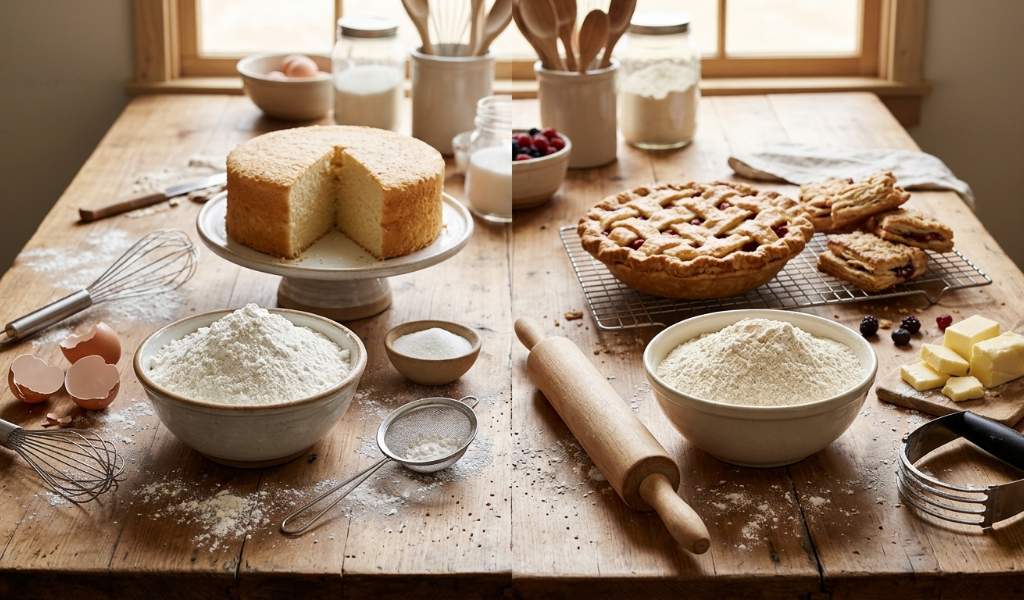
Bakers reach for pastry flour when they want a flaky, crumbly bite. Pie crusts, scones, tarts, and biscuits all benefit from its balance of structure and softness. Unlike bread dough, pastry dough doesn’t need heavy gluten development, so this flour suits low-rise, handheld baked goods particularly well.
What Makes Cake Flour Different
Cake flour takes the soft-wheat approach even further. Milled extremely fine and often bleached, it carries the lowest protein content of any common baking flour, typically between 6 and 8 percent. That bleaching process also weakens the remaining protein strands, which explains why cake flour feels almost powdery between your fingers.
Because gluten formation stays minimal, cakes made with this flour rise light and stay soft. Sponge cakes, layer cakes, and delicate cupcakes all depend on that low-protein structure to avoid a dense, chewy crumb. Interestingly, soft-wheat flour isn’t limited to ovens either; some bakers use similar low-gluten dough when they craft delicious bread without an oven, proving tenderness matters even outside conventional baking setups.
Key Differences Between Pastry Flour and Cake Flour
Protein content marks the clearest divide. Cake flour sits lower, which limits gluten and keeps baked goods soft. Pastry flour carries slightly more protein, giving it just enough backbone for flaky, structured textures.
Texture differs too. Cake flour feels finer and silkier, since manufacturers mill it more aggressively and frequently bleach it. Pastry flour, while still soft, retains a touch more coarseness and body compared to cake flour. For readers who want tested results instead of guesswork, checking a few of the top baking recipe websites before baking can help confirm which flour a dessert actually needs.
Can You Substitute One for the Other?
Sometimes a recipe calls for cake flour, but only pastry flour sits in the pantry, or the reverse happens. Fortunately, you can approximate one with the other through a simple adjustment. Combine all-purpose flour with cornstarch to mimic cake flour’s low protein content and fine texture.
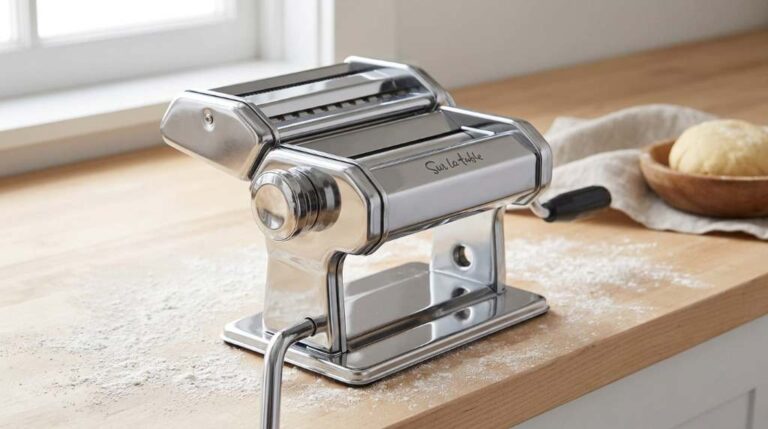
For pastry flour substitutes, mix all-purpose flour with a portion of cake flour. This blend split roughly in half often lands close to pastry flour’s protein range. Just remember that neither flour behaves like higher-protein dough made for pasta; anyone curious about that contrast can see it firsthand in this pasta maker review, where gluten strength plays a much bigger role.
Tips for Baking with Each Flour
Measure both flours by weight whenever possible. Volume measurements vary depending on how tightly the flour packs into the cup, which throws off protein-to-liquid ratios. A kitchen scale removes that guesswork entirely.
Sift cake flour before using it, since its fine texture clumps easily. Pastry flour benefits from sifting too, though it clumps less often than cake flour does. Store both in airtight containers away from heat and moisture to keep them fresh longer.
Frequently Asked Questions
Is pastry flour healthier than cake flour?
Pastry flour retains slightly more of the wheat’s natural nutrients since it undergoes less processing than bleached cake flour.
Can I use all-purpose flour instead of pastry or cake flour?
Yes, but the higher protein content in all-purpose flour will produce a denser, less tender result.
Why does cake flour get bleached?
Bleaching weakens protein further and creates a finer, whiter flour that helps cakes rise softer and lighter.
Does pastry flour work for bread?
No, pastry flour lacks enough protein to develop the gluten structure bread dough needs for a proper rise.
How do I store leftover pastry or cake flour?
Keep both in sealed, airtight containers in a cool pantry, or refrigerate them to extend freshness.
Final Thoughts
Pastry flour and cake flour share a soft-wheat origin, but their protein levels, textures, and ideal uses set them apart. Choosing the right one keeps your pie crusts flaky and your cakes light instead of dense. Next time a recipe specifies one or the other, measure carefully, and you’ll notice the difference in every bite.