

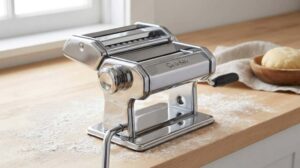

The Sur La Table Va Bene Manual Pasta Maker is a strong choice for home cooks wanting hands-on pasta control. It offers 9 thickness settings and includes 2 cutting functions for everyday pasta styles. The Sur La Table pasta machine feels especially suitable for beginners who value simplicity, control, and attractive countertop design.
Key Takeaways
- 9 adjustable settings provide useful control over pasta sheet thickness.
- The manual crank gives direct feedback during every rolling pass.
- The included cutters support common pasta shapes for everyday meals.
- A firm countertop clamp matters for smoother and safer operation.
- Dry cleaning helps protect the machine from moisture-related damage.
- The machine suits regular home cooking better than high-volume production.

What Makes The Va Bene Worth Considering?
The Va Bene approaches pasta making as a practical cooking ritual rather than an automated task. Instead of pressing buttons, you control every pass through the rollers. That hands-on process lets you adjust pressure, flouring, and thickness according to each dough.
Moreover, the machine combines a stainless steel construction with a distinctive juniper green finish. That appearance separates it from the many conventional silver pasta machines available today. Consequently, the Va Bene can remain visible without looking like an awkward appliance.
However, appearance alone should never determine a pasta maker purchase. The important question involves consistent rolling, dependable cutting, countertop stability, and manageable maintenance. On those points, the Va Bene presents a convincing home-kitchen proposition.
Before choosing any pasta appliance, consider how other kitchen tools support your cooking workflow. This cold press juicer benefits guide illustrates the same principle of matching equipment with practical habits.
Build Quality And Countertop Stability
The machine uses a stainless steel body designed for repeated household use. Its construction feels more substantial than many lightweight beginner machines. Therefore, users can expect a reassuring mechanical feel during normal rolling sessions.
The included clamp plays an equally important role in everyday performance. Secure attachment keeps the machine from shifting while you turn the crank. Still, always check the clamp before starting because loose mounting can affect sheet consistency.
Choose a solid countertop with enough edge clearance for the clamp. Avoid unstable tables, rounded edges, or surfaces that flex under pressure. A stable workstation makes the entire pasta-making process noticeably easier.
The removable handle also simplifies the operating sequence between rolling and cutting. You can reposition it according to the function you need. That design keeps the machine mechanically straightforward without adding unnecessary controls.
How The Nine Thickness Settings Perform
The nine settings represent one of the Va Bene’s most useful features. They allow gradual changes instead of forcing you into one fixed sheet thickness. As a result, beginners can learn how dough changes with each adjustment.
Start with the widest setting when preparing a fresh dough portion. Run the dough through several times until the sheet becomes smoother and more uniform. Then reduce the setting gradually rather than jumping directly toward a thin sheet.
This gradual approach also helps you recognize dough problems early. If the sheet tears, reduce the pressure and check its hydration. If it sticks, add a light dusting of flour before another pass.
For lasagna, thicker sheets generally provide a substantial texture and structure. Meanwhile, fettuccine and spaghetti usually benefit from thinner, more refined sheets. Dumpling skins can require additional experimentation because dough formulas vary considerably.
Making Spaghetti, Fettuccine, And Lasagna
The Va Bene focuses on pasta styles that most home cooks actually prepare. Its rolling mechanism creates the sheets needed for lasagna and cut noodles. The included cutting functions then turn those sheets into recognizable pasta shapes.
Spaghetti requires careful handling because thin strands can stick together quickly. Dust freshly cut noodles lightly and separate them before they form clumps. Consequently, a drying rack or lightly floured tray becomes useful during larger batches.
Fettuccine offers an easier starting point because its wider ribbons are simpler to handle. The broader strands also pair well with creamy, tomato-based, and meat sauces. For beginners, fettuccine provides an excellent first test of the machine.
Lasagna sheets require no cutting attachment after rolling. Instead, focus on producing consistent thickness across the entire sheet. This approach makes layering easier and helps the pasta cook more evenly.
For broader kitchen preparation ideas, these essential kitchen gadgets offer useful context for building an efficient cooking setup.
Ease Of Use For Beginners
The Va Bene does not require complicated assembly before your first pasta session. Attach the clamp, secure the machine, insert the handle, and prepare your dough. After that, the learning process mostly involves developing consistent rolling technique.
Beginners should resist the temptation to rush the first batch. Pasta dough rewards patience because gluten development strongly affects how easily sheets pass through rollers. Therefore, proper kneading and resting often matter more than aggressive cranking.
Divide large dough portions into manageable pieces before rolling. Smaller pieces give you better control and reduce unnecessary stretching. They also make it easier to maintain consistent sheet dimensions.
Keep your hands lightly floured when handling finished sheets. However, avoid excessive flour because it can dry the surface and affect sauce adhesion. Use only enough flour to prevent sticking during the workflow.
Where The Manual Design Helps And Hurts
The manual crank provides something electric machines cannot fully replicate: direct physical feedback. You can immediately feel resistance when dough becomes too thick or sticky. That feedback helps experienced cooks adjust their technique instinctively.
Additionally, manual operation eliminates motors, electrical controls, and power requirements. You can use the machine anywhere you have a stable counter. This simplicity also reduces the number of components that can malfunction.
On the other hand, hand cranking requires effort during repeated batches. Preparing pasta for a large gathering can therefore become physically demanding. Users with limited hand strength may prefer an electric alternative.
Still, moderate home cooking rarely requires continuous operation for long periods. For weekly pasta nights, the manual format can feel enjoyable rather than burdensome. The key depends on whether you view pasta making as cooking or convenience.
Cleaning And Maintenance: The Part You Should Not Ignore
Proper maintenance protects the rollers and cutting mechanisms from accumulated flour and dough. The manufacturer’s instructions recommend dry cleaning rather than submerging the machine. Therefore, avoid treating the Va Bene like a dishwasher-safe kitchen utensil.
After each session, allow loose flour to fall away before brushing remaining particles. Use a suitable dry brush to reach narrow areas around the rollers and cutters. This routine takes little effort when you perform it immediately.
Never force wet dough through the machine when you can correct the dough consistency first. Excess moisture can create sticky residue that becomes difficult to remove. Instead, adjust the dough gradually with flour before continuing.
For a broader kitchen maintenance routine, this guide to spring cleaning your kitchen provides useful organizational ideas.
What I Like Most About The Va Bene
The strongest advantage remains its balance between control and simplicity. Nine settings provide meaningful adjustment without creating an overwhelming control panel. Meanwhile, the hand crank keeps the process intuitive from start to finish.
The design also deserves credit for making a functional appliance visually appealing. The juniper green finish gives the machine a more distinctive personality. Consequently, cooks may feel comfortable keeping it accessible rather than hiding it after every use.
Another advantage involves its straightforward workflow. Roll the dough, adjust thickness, switch to cutting, and separate the pasta. That sequence feels logical after only a few practice sessions.
Most importantly, the machine encourages better pasta technique. You learn how dough responds to pressure, flour, resting, and thickness changes. Those skills remain useful even if you eventually upgrade to another pasta maker.
What Could Be Better?
The Va Bene still has limitations that buyers should understand before purchasing. Manual operation requires physical involvement, especially when processing multiple dough portions. Therefore, convenience-focused cooks may find electric machines more attractive.
Cleaning also requires discipline because the machine should not receive careless water exposure. Dry brushing takes longer than rinsing a removable dishwasher-safe component. However, consistent maintenance prevents buildup and keeps the mechanism ready.
The machine also focuses on familiar pasta shapes rather than offering an enormous attachment ecosystem. That limitation will not bother most casual cooks. Yet, serious pasta enthusiasts may eventually want specialized cutters or additional accessories.
Finally, beginners should expect a short learning period. The machine cannot compensate for poorly hydrated or inadequately kneaded dough. Once your dough technique improves, the machine becomes substantially easier to use.
Va Bene Versus Electric Pasta Makers
Choosing between manual and electric models depends primarily on your preferred cooking experience. Manual machines offer tactile control, simple mechanics, and freedom from electrical outlets. Electric machines prioritize speed and reduced physical effort.
The Va Bene makes more sense when you enjoy participating in the preparation process. You can slow down, inspect each sheet, and make adjustments immediately. This approach suits cooks who treat homemade pasta as an activity.
Electric models become more appealing when producing large quantities regularly. They can reduce repetitive hand movement and simplify extended pasta sessions. Therefore, families hosting frequent dinner parties may value automation more highly.
Neither approach automatically produces better pasta. Dough formulation, technique, thickness, cooking time, and sauce selection remain crucial. The best machine simply matches the cook’s habits and expectations.
Who Should Buy The Sur La Table Va Bene?
The Va Bene suits beginners who want to learn traditional pasta-making without complicated machinery. It also works well for experienced home cooks who appreciate mechanical control. Its appearance makes it particularly appealing for kitchens where appliances remain on display.
It makes less sense for people seeking maximum speed with minimum effort. Likewise, cooks producing very large pasta quantities may prefer powered equipment. The manual format rewards involvement rather than convenience.
Consider buying it if these priorities match your cooking style:
- Fresh pasta for weekly family meals.
- Hands-on cooking instead of automated preparation.
- Adjustable thickness for several pasta styles.
- A countertop machine with an attractive finish.
- Simple mechanical operation without electrical components.
- A manageable learning curve for developing pasta skills.
How To Get Better Results From Your First Batch
Begin with a dough recipe that uses familiar ingredients and predictable hydration. Avoid experimenting with specialty flours during your first session. A forgiving dough lets you learn the machine without adding unnecessary variables.
Next, knead the dough until it feels smooth and elastic. Give it adequate resting time before rolling to reduce excessive resistance. Then divide it into smaller pieces before feeding the rollers.
Keep the first passes gentle and use the widest setting. Fold the dough when necessary to improve uniformity and structure. Gradually move toward thinner settings as the sheet becomes smoother.
Finally, cut only after reaching the thickness required for your chosen pasta. Dust the finished strands lightly and separate them promptly. Cook fresh pasta soon afterward or dry it properly for later use.
Is The Va Bene A Kitchen Essential?
The answer depends on how often you genuinely want to make fresh pasta. For occasional cooks, it remains a specialized tool rather than an everyday necessity. For pasta enthusiasts, however, its versatility can justify the counter space.
The Va Bene succeeds because it avoids unnecessary complexity while providing useful control. Its weaknesses mostly involve manual effort, careful cleaning, and a modest learning curve. Those drawbacks become less significant when you enjoy the process itself.
Ultimately, this machine works best as a cooking tool rather than a shortcut. It teaches technique while producing practical results for everyday meals. That combination makes it a credible kitchen investment for the right home cook.
Final Verdict: Should You Buy The Va Bene?
Yes, the Sur La Table Va Bene is worth considering if you want reliable manual pasta making at home. Its nine thickness settings, included cutters, sturdy construction, and simple workflow create a balanced package. However, buyers seeking effortless production should consider an electric model instead.
For most home cooks, the biggest value comes from control rather than raw speed. You can adjust each sheet according to dough texture and the final dish. That flexibility makes the Va Bene useful across pasta nights, family cooking, and weekend experiments.
If those strengths match your priorities, the Va Bene deserves a place on your shortlist. Compare your available counter space, cooking frequency, and preferred pasta styles before purchasing. Then choose the machine that fits your actual habits rather than your idealized kitchen routine.
Frequently Asked Questions
Is The Sur La Table Va Bene Good For Beginners?
Yes, its straightforward controls and nine thickness settings make it approachable for first-time pasta makers.
How Many Thickness Settings Does The Va Bene Have?
The Va Bene provides nine adjustable thickness settings for rolling different pasta styles.
Can The Va Bene Make Fettuccine And Spaghetti?
Yes, its included cutting functions support common pasta shapes including fettuccine and spaghetti.
Is The Va Bene Dishwasher Safe?
No, the machine requires careful dry cleaning rather than dishwasher or water-based cleaning.
Does The Va Bene Require A Countertop Clamp?
Yes, the included clamp secures the machine to a stable countertop during manual operation.