





Most homeowners discover they bought the wrong chainsaw only after they are hanging from a ladder, fighting a heavy machine against a six-inch branch. Choosing the Perfect Chainsaw for Tree Trimming is not about buying the biggest or most powerful model—it is about matching the saw’s size, power source, bar length, and safety features to your specific branch cutting and pruning trees needs. The right chainsaw improves efficiency, reduces fatigue, minimizes safety risks, and helps maintain healthy trees around your property. Yet many property owners spend money on oversized professional equipment when a lightweight trimming saw would perform better. Whether you’re maintaining backyard maples, removing storm-damaged limbs, shaping fruit trees, or handling seasonal landscape maintenance, understanding what separates a suitable trimming chainsaw from an unsuitable one can save time, money, and effort. This guide explains exactly how to evaluate chainsaw types, cutting capacities, safety systems, and practical considerations so you can confidently choose the ideal tool for maintaining trees around your home.
What Makes a Chainsaw Ideal for Tree Trimming Around a Property?
A tree-trimming chainsaw should be lightweight, easy to control, appropriately sized for branches, and equipped with modern safety features.
Unlike logging or land-clearing operations, residential tree maintenance focuses primarily on branch cutting, pruning trees, removing damaged limbs, and controlling growth. Most homeowners rarely cut trunks larger than 12 inches in diameter.
For this reason, maneuverability often matters more than maximum horsepower. A chainsaw that is too heavy increases fatigue and reduces control, particularly when making overhead or angled cuts.
Important characteristics include:
- Lightweight design
- Balanced weight distribution
- Reliable chain brake system
- Low kickback chain technology
- Comfortable grip handles
- Easy maintenance requirements
- Adequate power for branch sizes on your property
Many homeowners researching residential options also compare lightweight cordless models through guides covering battery-powered chainsaws for property maintenance before selecting a suitable trimming tool.
Which Type of Chainsaw Is Best for Pruning Trees?
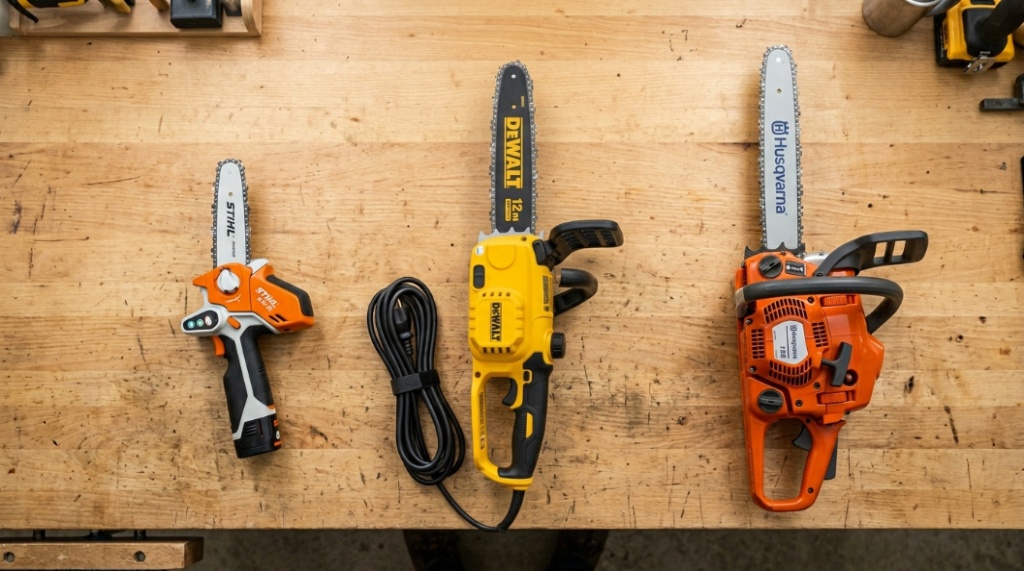
Battery-powered chainsaws are often the best choice for residential pruning trees because they combine portability, lower noise, reduced maintenance, and sufficient cutting power.
Modern chainsaws generally fall into three categories:
- Battery-powered chainsaws
- Gas-powered chainsaws
- Corded electric chainsaws
Are Battery Chainsaws Good for Tree Trimming?
Yes. Advances in lithium-ion battery technology have significantly improved performance.
For homeowners trimming trees several times per year, cordless models offer:
- Instant startup
- Lower maintenance requirements
- No fuel mixing
- Reduced vibration
- Quieter operation
- Excellent maneuverability
When Is a Gas Chainsaw Better?
Gas chainsaws are preferable when handling large properties, frequent cutting tasks, or thicker hardwood limbs.
They provide:
- Long runtime
- Higher cutting power
- Greater productivity
- No charging interruptions
Are Corded Electric Chainsaws Worth Considering?
Yes, if trimming occurs close to power outlets.
Corded models deliver consistent performance but are restricted by extension cord length and mobility limitations.
What Chainsaw Bar Length Should You Choose for Branch Cutting?
For most homeowners, a bar length between 10 and 16 inches provides the best balance of safety, control, and cutting capacity.
The guide bar determines the maximum cutting diameter and directly influences maneuverability.
| Bar Length | Best Use | Property Type |
|---|---|---|
| 10–12 inches | Light pruning and small limbs | Small residential yards |
| 14 inches | General tree maintenance | Average suburban properties |
| 16 inches | Large branches and storm cleanup | Larger residential lots |
| 18+ inches | Heavy-duty cutting | Rural or professional work |
Many arborists recommend selecting the shortest bar capable of handling your largest routine cuts because shorter bars offer better control and reduce kickback potential.
How Much Power Do You Actually Need for Tree Trimming?
Most homeowners need moderate cutting power rather than professional-grade performance.
A common mistake is assuming greater power automatically improves results. For pruning trees and removing limbs, excessive power often adds unnecessary weight and complexity.
Consider your average branch diameter:
- Under 4 inches: Compact cordless chainsaw
- 4–8 inches: Mid-range battery or electric model
- 8–12 inches: Powerful battery or gas chainsaw
- 12+ inches: Heavy-duty gas chainsaw
The majority of residential trimming tasks fall within the 4–8 inch range, making mid-sized chainsaws the most practical option.
Can a Small Chainsaw Cut Large Branches?
Yes, within reason.
Proper technique often matters more than raw motor output. A sharp chain and controlled cutting method can efficiently remove moderately sized limbs without requiring commercial-grade equipment.
Which Safety Features Should a Tree Trimming Chainsaw Have?
The most important safety features are a chain brake, low-kickback chain, chain catcher, anti-vibration system, and hand guards.
According to safety organizations and chainsaw injury studies, kickback remains one of the most common causes of chainsaw-related accidents.
Before purchasing a chainsaw, verify it includes:
- Automatic chain brake
- Low-kickback guide bar
- Chain catcher
- Hand protection guards
- Throttle lockout
- Anti-vibration technology
- Tool-free chain tensioning if available
Modern safety systems substantially reduce injury risk while improving operator confidence.
Should Beginners Use Pole Chainsaws?
Not always.
While pole saws help reach elevated branches, they introduce leverage challenges and can become difficult to control at full extension. Beginners should start with lightweight handheld models before advancing to extended-reach equipment.
How Does Tree Type Affect Chainsaw Selection?
Different tree species influence the amount of cutting power required.
Softwoods such as pine, cedar, and spruce are easier to cut than dense hardwoods like oak, hickory, maple, or walnut.
Homeowners maintaining hardwood landscapes should consider:
- Higher battery voltage
- More powerful motors
- Premium cutting chains
- Longer battery runtime
Fruit tree maintenance often requires precision rather than brute force, making lightweight chainsaws especially valuable for controlled pruning cuts.
What Is the Best Chainsaw for Fruit Tree Pruning?
A lightweight chainsaw with a 10–12-inch guide bar is typically ideal.
Smaller bars improve visibility and control, reducing accidental damage to productive limbs and supporting healthier tree structure and understanding Jig Saw Performance.
How Important Is Chainsaw Weight During Branch Cutting?
Weight is one of the most overlooked factors when choosing a trimming chainsaw.
Even an extra two pounds can become noticeable after 30 minutes of repetitive cutting.
Lightweight chainsaws offer:
- Reduced arm fatigue
- Improved maneuverability
- Better control overhead
- Greater cutting accuracy
- Enhanced safety during prolonged use
Most residential users benefit from saws weighing between 6 and 12 pounds, depending on experience level and workload.
Does a Heavier Chainsaw Cut Better?
Not necessarily.
While larger chainsaws often provide more power, trimming tasks usually prioritize precision and handling over maximum cutting force.
What Maintenance Requirements Should You Consider Before Buying?
Chainsaw maintenance directly impacts performance, safety, and lifespan.
Even premium chainsaws perform poorly when neglected.
Key maintenance considerations include:
- Chain sharpening frequency
- Bar lubrication requirements
- Chain tension adjustments
- Battery care procedures
- Air filter cleaning (gas models)
- Spark plug replacement (gas models)
Battery-powered models generally require the least maintenance, making them attractive for occasional residential users.
How Often Should You Sharpen a Chainsaw Chain?
The chain should be sharpened whenever cutting performance declines, sawdust becomes fine, or extra pressure is needed during cutting.
A sharp chain improves efficiency, reduces motor strain, and creates cleaner pruning cuts that support tree health.
How Can You Match the Right Chainsaw to Your Property Size?
The best chainsaw depends largely on the number of trees, branch sizes, and maintenance frequency on your property.
| Property Size | Recommended Chainsaw | Typical Use |
|---|---|---|
| Small yard | 10–12 inch cordless | Seasonal pruning |
| Average suburban lot | 14-inch battery chainsaw | Routine maintenance |
| Large residential property | 14–16 inch high-capacity model | Frequent trimming |
| Rural acreage | 16–20 inch gas chainsaw | Heavy branch removal |
Evaluating actual workload rather than worst-case scenarios prevents overspending and improves usability.

What Common Mistakes Should Homeowners Avoid When Choosing a Chainsaw?
The biggest mistakes involve buying oversized equipment, ignoring safety features, and focusing only on price.
Common purchasing errors include:
- Choosing excessive bar length
- Ignoring chainsaw weight
- Overlooking battery runtime
- Buying without considering tree species
- Selecting based solely on horsepower
- Neglecting maintenance requirements
- Skipping safety equipment purchases
A balanced combination of power, comfort, safety, and reliability almost always delivers better long-term value than simply choosing the most powerful model available.
Conclusion: How Do You Select the Perfect Chainsaw for Tree Trimming?
The perfect chainsaw for tree trimming is one that safely handles your typical branch sizes while remaining comfortable, manageable, and efficient to operate.
For most homeowners, a lightweight battery-powered chainsaw with a 12–16 inch guide bar offers the ideal combination of convenience, performance, and control. Property size, tree species, maintenance expectations, and cutting frequency should guide your decision more than marketing claims or maximum horsepower ratings. Prioritizing safety systems, manageable weight, and proper bar length will help you perform cleaner cuts, improve pruning results, and reduce fatigue during routine yard maintenance.
If you’re evaluating modern cordless options, comparing trusted resources on affordable battery-powered chainsaws for homeowners can help narrow down the best fit for your property. Choose wisely, maintain your equipment properly, and your chainsaw will become one of the most valuable tools in your landscape maintenance arsenal.
Frequently Asked Questions
What size chainsaw is best for trimming tree branches?
A 12–16 inch chainsaw is ideal for most residential tree trimming tasks. It provides enough cutting capacity for common limbs while remaining easy to control and maneuver.
Can a battery-powered chainsaw handle pruning trees?
Yes. Modern cordless chainsaws offer sufficient power for routine pruning trees, branch removal, and seasonal maintenance around residential properties.
Is a gas chainsaw necessary for homeowners?
No. Most homeowners can complete routine trimming and branch cutting tasks using battery-powered or electric chainsaws. Gas models are typically better suited for larger properties and heavy-duty workloads.
How often should a chainsaw chain be replaced?
A chainsaw chain should be replaced when sharpening can no longer restore cutting performance, when excessive wear appears, or when damaged links create safety concerns.
What is the safest chainsaw for beginners?
A lightweight cordless chainsaw with a low-kickback chain, chain brake, anti-vibration system, and comfortable grip is generally the safest option for beginners.
Can chainsaws damage trees during pruning?
Yes. Improper cutting techniques can tear bark, create large wounds, and increase disease risk. Sharp chains and correct pruning methods help protect tree health.
Should I buy a pole saw or a regular chainsaw?
Choose a regular chainsaw for ground-level work and lower branches. A pole saw becomes valuable when frequently trimming elevated limbs without using ladders.