



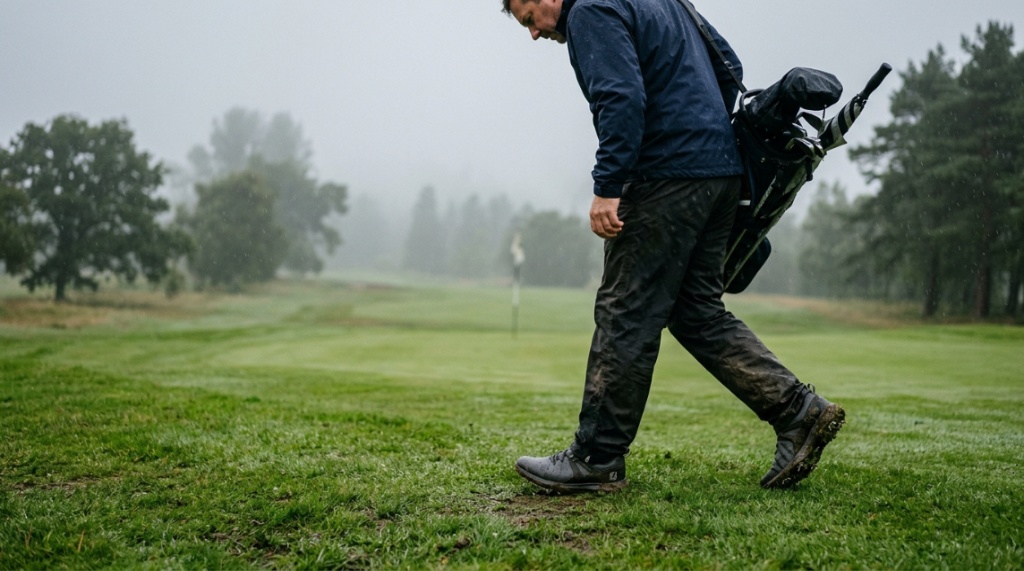
You step onto the first tee, the sky is gray, and the fairway is already soaked from last night’s rain. Within three holes, your socks are wet, your feet are cold, and your round is ruined. Sound familiar? Finding reliable waterproof golf shoes budget options is the single biggest challenge for golfers who want comfort without emptying their wallets. Too many players either overpay for premium brand names or buy cheap shoes that leak after five rounds. This guide solves that problem by giving you a clear, actionable strategy to find durable, waterproof golf shoes that protect your feet and your finances.
What Features Actually Matter in Waterproof Golf Shoes?
The most important features in waterproof golf shoes are the membrane technology, outsole traction, material quality, and sole construction. You do not need every premium upgrade to stay dry. Focus on these four areas to separate genuinely useful features from marketing fluff.
Waterproof membranes such as Gore-Tex, Drysoft, or proprietary brands (like Adidas Climaproof or FootJoy HydroLite) are the gold standard. These materials block water from entering while allowing moisture from sweat to escape. A shoe that seals water out but traps sweat inside will still leave you uncomfortable.
Understanding Waterproof Membranes
- Gore-Tex: Industry leader. Highly breathable and durable. Expect to pay a premium.
- Brand Proprietary (e.g., Drysoft, HydroLite): Often 80-90% as effective as Gore-Tex but costs significantly less. Excellent for budget buyers.
- Coated Leather or Synthetic: Cheapest option. Dries slowly and can crack over time. Avoid for longevity.
Traction and Outsole Patterns
Look for outsoles with aggressive, multi-directional nubs. Spikeless shoes are more versatile for walking on hard surfaces, while spiked shoes offer supreme grip in wet grass. For budget-conscious golfers, modern spikeless designs with rubber nubs provide excellent traction without the cost replacement spikes.
Upper Material and Durability
Premium leather is durable but heavy and expensive. Synthetic leather or mesh hybrids are lighter, cheaper, and often more breathable. Ensure the material is treated with a water-repellent coating. Cheap plastic-like synthetics are a red flag.
Why Do Some Cheap Waterproof Golf Shoes Fail So Quickly?
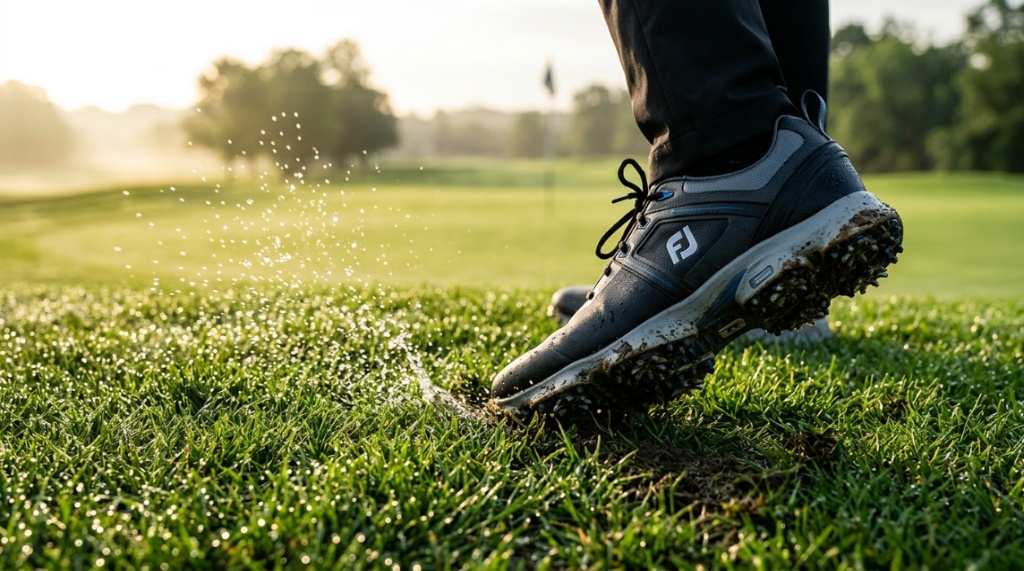
Inexpensive waterproof golf shoes fail mainly because of poor construction quality, inferior membrane technology, and inadequate sealing at the seams. Water always finds the weakest point, and budget shoes often cut corners where it matters most—the bonding between the upper and the sole.
The most common failure point is the tongue and collar area. If the tongue is not gusseted (attached to the sides of the shoe), water will seep in during wet grass. Another failure point is the sole bonding; cheap adhesives break down after a few rounds, creating tiny gaps. Finally, low-quality mesh uppers absorb water quickly, and even with a coating, they cannot stop moisture from wicking through.
Red Flags to Spot When Shopping
- Unsealed stitching on the upper
- Non-gusseted tongue
- Thin, rubber-like sole that feels rigid
- No warranty or poor return policy
- Vague waterproof claims (e.g., “water-resistant” or “weather-ready”)
How Much Should You Realistically Spend on Waterproof Golf Shoes?
You can find reliable waterproof golf shoes for under $120, and excellent options exist between $80 and $100. Spending more than $180 typically buys marginal gains in weight reduction, style, or brand cachet rather than significantly better waterproofing.
The sweet spot for budget-minded golfers is $90 to $130. In this range, brands like New Balance, Skechers, and Under Armour offer shoes with genuine waterproof membranes and solid traction. Below $70, you are gambling on quality, though occasional clearance sales on previous-year models can yield bargains. Above $160, you enter premium territory where the main cost is luxury materials or tour-level pedigree. For the average weekend golfer playing 1-2 times per week, a $100 shoe will easily last two seasons if properly cared for.
Which Brands Offer the Best Value for Waterproof Golf Shoes?
Skechers, New Balance, Under Armour, and FootJoy (the DryJoys or Fuel series) offer the best balance of waterproofing, comfort, and price. These brands prioritize function over flash, making them ideal for golfers on a budget.
Here is a quick comparison of budget-friendly options:
| Brand | Model Example | Approximate Price | Waterproof Tech | Best For |
|---|---|---|---|---|
| Skechers | Go Golf Elite V.4 | $80 – $110 | Gore-Tex (select models) | Comfort and cushioning |
| New Balance | Fresh Foam Contend | $90 – $120 | Proprietary membrane | Wide feet and stability |
| Under Armour | UA HOVR Drive | $100 – $130 | UA Waterproof | Modern design and breathability |
| FootJoy | DryJoys Premiere (previous generation) | $100 – $140 | HydroLite | Classic style and durability |
| Adidas | Codechaos (older models) | $90 – $120 | Climaproof | Spikeless traction and style |
Can You Find Genuinely Waterproof Shoes Under $100?
Yes, you can find genuinely waterproof golf shoes under $100, but you must be selective and patient. The key is to look for last year’s models or buy during off-season sales, not to compromise on essential features.
Major retailers like Golf Galaxy, Dick’s Sporting Goods, and online stores like Amazon frequently discount previous models by 30-50% when new lines launch. For example, the Adidas Codechaos 2022 model originally sold for $160 but can often be found for $80-90 on clearance. These shoes still feature Climaproof waterproofing and a full outsole. The catch is limited color and size availability. Another strategy is to buy from discounters like Rock Bottom Golf or Global Golf, where you can find legitimate brand-name shoes with full warranties at reduced prices. Avoid unnamed brands from marketplaces that lack customer reviews or return policies.
How Do Spikeless vs. Spiked Waterproof Shoes Compare on Budget?
Spikeless waterproof shoes are generally more budget-friendly overall because they eliminate the cost of replacement spikes and offer longer outsole life. Spiked shoes provide better grip in wet conditions but require ongoing maintenance costs.
Consider this: A spiked shoe might cost $120 up front, but you will need to replace the spikes ($10-20) every 20-30 rounds. Over two years, that adds up. A spikeless shoe at $100 with a durable rubber outsole will likely last the same two years with no extra cost. Additionally, spikeless shoes are more versatile for walking on pavement, cart paths, or into the clubhouse, which reduces wear on the spikes themselves. For the budget-conscious golfer who plays in moderate wetness (not torrential rain), spikeless shoes provide the best value-per-dollar.
When Is the Best Time of Year to Buy Waterproof Golf Shoes?
The best time to buy waterproof golf shoes at discounted prices is late fall (October–November) and late winter (February–March) during end-of-season clearance events. Retailers clear out inventory to make room for next season’s models.
Late fall is ideal because stores discount summer and spring models. Late winter offers pre-season deals as new inventory arrives. If you can wait, target major sales like Black Friday, Cyber Monday, or Memorial Day. Golf-specific retailers also host “demo day” sales where last year’s floor models are sold at deep discounts. Sign up for email alerts from stores like Global Golf or Rock Bottom Golf—they frequently send 20-30% off coupons. Avoid peak season (April–June) when prices are highest and selection is lowest.
What Is the Best Way to Test Waterproofing Before Buying?
The best way to test waterproofing before buying is to check the warranty policy and read verified customer reviews focused on waterproof performance. You can also perform a simple water test in-store if allowed.
Look for shoes that offer a one-year waterproof warranty. Brands like FootJoy and Skechers often back their waterproof claims. In online reviews, search specifically for phrases like “wet grass,” “rain round,” or “waterproof test.” Ignore reviews that only discuss comfort or style. If possible, visit a store, put on the shoe, and ask for a damp towel. Place the shoe on the towel and see if moisture seeps through the mesh or stitching. Another trick: bring a spray bottle, mist the shoe, and check for beading. Good waterproofing will cause water to bead up and roll off, not soak in.
How Do You Care for Budget Waterproof Golf Shoes to Make Them Last?
Proper care can double the lifespan of your budget waterproof shoes. The three essential steps are cleaning after every round, reapplying waterproofing treatment, and storing them correctly.
Step 1: Remove dirt and grass immediately after your round. Use a soft brush and damp cloth. Dry mud can degrade the membrane over time.
Step 2: Apply a waterproofing spray (such as Nikwax or Crep Protect) every 10-15 rounds or after heavy use. Even factory membranes need re-coating on mesh areas.
Step 3: Store shoes in a cool, dry place with shoe trees or crumpled newspaper to absorb moisture. Never store them in a hot car or direct sunlight, as heat degrades adhesives and membranes.
Avoid machine washing or submerging the shoes. If they get soaked from rain, let them air dry naturally for 24-48 hours. Resist using a hairdryer or heater, which can shrink the upper and loosen the sole bonding.
Which Type of Closure System Is Best for Waterproofing on a Budget?
A laced closure system with waterproof eyelets offers the best combination of security, adjustability, and cost-effectiveness. BOA systems are convenient but more expensive to repair if they break, and velcro straps are less secure for wet conditions.
Laces allow you to tighten the shoe evenly around your foot, creating a better seal at the tongue. Look for shoes with rust-proof or sealed eyelets to prevent water wicking through the lace holes. BOA systems use a dial and cable; they are excellent for quick adjustment but cost $20-30 more per pair. If a BOA cable snaps, you often cannot play until it is repaired. Velcro straps are typical in older designs and tend to loosen in wet conditions or collect debris. For a budget-conscious golfer, traditional laces are the safest, most reliable choice.
If you want a curated list of models that hit every point discussed here, check out this resource on finding the best waterproof golf shoes budget options that have been tested for real-world performance.
Frequently Asked Questions
Are leather or synthetic waterproof golf shoes better for the budget?
Synthetic materials are better for a budget because they are lighter, cheaper, and often more breathable. Premium leather costs more and requires more maintenance to stay waterproof. However, mid-range synthetic blends can still offer excellent durability.
Can I use regular waterproof spray on my golf shoes?
Yes, but only on mesh or synthetic uppers. Do not use harsh sprays on leather, as they can damage the material. Always check the shoe’s care label. A dedicated fabric and mesh waterproofing spray is safest and most effective.
Is it worth buying used waterproof golf shoes?
It can be worth it if the shoes are in excellent condition with minimal wear on the sole and no visible damage. However, used waterproof shoes may have degraded membranes from previous use. Always ask about the original warranty and test the waterproofing if possible.
Do spikeless golf shoes slip in wet grass?
Modern spikeless shoes with deep, multi-directional rubber nubs provide excellent grip in wet grass. Only the most extreme conditions (heavy mud or icy surfaces) will cause noticeable slipping. For weekend rounds, spikeless shoes are generally sufficient.
How often should I replace waterproof golf shoes?
Replace them when you notice water soaking through during a round or when the outsole tread is worn smooth. With good care, a budget-friendly waterproof shoe should last 1-2 seasons (30-60 rounds) before the membrane begins to fail.
Can I wear waterproof golf shoes for other sports or walking?
Yes, many spikeless water-resistant models double as casual walking shoes. Spiked models are not recommended for pavement or hard surfaces because the spikes wear down quickly. Using them solely for golf extends their life.
What is the difference between water-resistant and waterproof golf shoes?
Water-resistant shoes can handle light mist or dry grass but will soak through in steady rain or heavy dew. Waterproof shoes use sealed membranes and taped seams to prevent water entry entirely. Always choose waterproof over water-resistant for wet conditions. Investing in high-performance footwear shouldn’t drain your budget, especially when you are trying to optimize your entire bag. Pairing smart footwear choices with the Perfect Golf Setup for High Handicappers is the fastest way to drop strokes without breaking the bank.
Conclusion
Buying waterproof golf shoes without overspending is entirely achievable if you focus on the right features, timing, and maintenance. You do not need to chase the most expensive brands—mid-range options from Skechers, New Balance, Under Armour, and FootJoy deliver reliable protection for $90 to $130. Your strategy should be simple: prioritize a genuine waterproof membrane, a gusseted tongue, and durable outsole traction over brand hype or flashy designs. Shop during clearance seasons, read reviews for waterproof performance, and care for your shoes after every round. By following this guide, you can confidently step onto any wet fairway knowing your feet and your wallet are both protected. Find your pair today and enjoy dry, comfortable rounds all season.