




Supercomputers of today are super-fast and super-powerful. But what about the future? What can supercomputers of the future be capable of? The answer to that question lies in miniaturization—the process of making something smaller. Supercomputers of the future will be smaller, faster, and more energy-efficient than supercomputers of today. It may even fit in your pocket. We’re talking supercomputer science here, so sit up and take note. In this blog, we’ll tell you everything you need to know about miniaturization: where it stands today and how far it has come. We’ll also discuss its challenges and potential uses in the future.
History of miniaturization
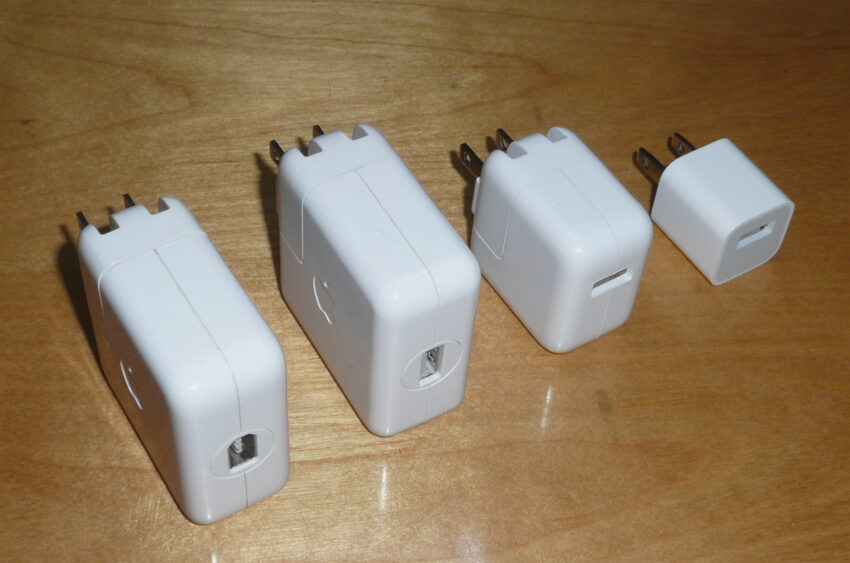
The history of miniaturization can be traced back to the early days of computing when CPUs were big and bulky. As time progressed, smaller and thinner computer components were designed to fit into various devices. This eventually led to the creation of the first microcomputer in 1969. Since then, computers have become smaller and more compact. With the advancement of technology, miniaturization has played a critical role in the development of modern computing technologies.
This is because it has opened up new opportunities for computer applications and systems. In particular, it has helped create thinner laptops and tablets that can be easily carried around. Miniaturization is also playing a major role in the development of future supercomputers. This is because it enables scientists to build more powerful machines with less space and power consumption. Finally, miniaturization is continuing to play a significant role in the development of computer-based systems such as wearable computers, game consoles, robots, drones, and self-driving cars. The future of miniaturization is promising and exciting!
Microcomputers and miniaturization
The world’s fastest supercomputer, the Sunway TaihuLight, has increased its processing speed by 70,000 times in the last 20 years. However, supercomputer performance doesn’t always translate to microcomputer performance. The main factor determining computer performance is the amount of power it consumes.
Because of their high-performance requirements and limited energy source, computers have to be miniaturized. Supercomputers are capable of performing calculations at an unprecedented speed, but can’t be used as household appliances because of their immense power consumption. Therefore, there is an unmet need for software that could help promote computer products in developing microcomputers.
Possibilities of miniaturization
Supercomputers have the capability to tackle complex computational problems such as aircraft design, oil prospecting, and global climate simulations. However, recent technological advancements are expected to result in smaller and more powerful computers. Super-miniaturization is a key area of focus for computer scientists today. A supercomputer is capable of solving problems beyond the reach of a conventional computer. As computer power becomes cheaper, the demand for supercomputing has increased exponentially. One of the most popular uses of supercomputers is designing aircraft. The world’s fastest supercomputer, Fugaku, has been used to fight against the Covid-19 pandemic and for disaster-prevention simulations (See examples).
In recent years, exascale computers have gained popularity among researchers because they offer superior performance than petascale computers (10 times faster and more powerful). So far, these high-performance computers have been used mostly in research institutes and government agencies. However, with the aid of miniaturization technologies, smaller and cheaper computers can be developed for widespread use by scientists and students across the globe (See examples).
Challenges of miniaturization
The emergence of quantum computers promises to disrupt the computer hardware industry, and supercomputers are one of the primary targets of quantum computers. But as Moore’s Law hits technological barriers, supercomputers become increasingly compact.
The miniaturization of computer hardware has led to various challenges for software developers. For instance, computation time on a quantum computer is expected to be orders of magnitude faster than on today’s classical computers, and therefore it requires custom-written algorithms that can run in sub-seconds. Many of these algorithms are so complex that classical computers cannot handle them without significant additional resources and time.
In addition, as supercomputers become more compact, they require climate control rooms to operate effectively. As such, software becomes increasingly vital in ensuring their uninterrupted performance.
Potential uses of miniaturization
Currently, supercomputers are much more powerful than the computers you use at home. But there’s an increasing trend towards miniaturization in computing, as it can boost performance and efficiency. This is because supercomputers of the future could be small enough to fit in your pocket. The ability to carry a computer around with you opens up numerous possibilities, from high-powered data analysis to transportation and manufacturing. Miniaturization is also revolutionizing communication, as devices become smaller and more energy efficient.
With advancements like these, the future of computing appears bright.
How will miniaturization impact the future?
Supercomputers of the future are expected to be miniaturized. The development of smaller, more powerful computers will lead to bigger and better opportunities in the field of artificial intelligence and data analytics. Besides, the development of quantum electronics will provide a platform for super-powerful computers in the future.
Miniaturization is also essential to create smarter, more efficient machines that can react faster and make decisions more accurately. This will open up new fields of research in machine learning, robotics, computational intelligence, and quantum optics.
The demand for miniaturized sensors and actuators is also expected to increase with the advancement of technology. In short, miniaturization will have a positive impact on our overall quality of life in many ways.
Conclusion
Miniaturization has really revolutionized the computer industry. With the advent of miniaturized computers, we have been able to achieve more through efficiency and portability. These computers are compact and efficient enough to be used in a wide range of applications. The future is bound to bring even more miniaturizations as innovation and technology keep evolving at a faster pace. As a user, you can benefit from these developments by being able to carry your computer with you anywhere you go. To learn more about computing technology and its impact on society, read our ebook ‘Computing Technology – A Journey Through Time’. Comment below and tell us if this ebook helped you better understand computing history!